Causes and risk factors
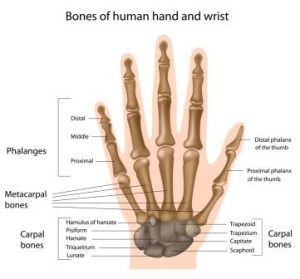
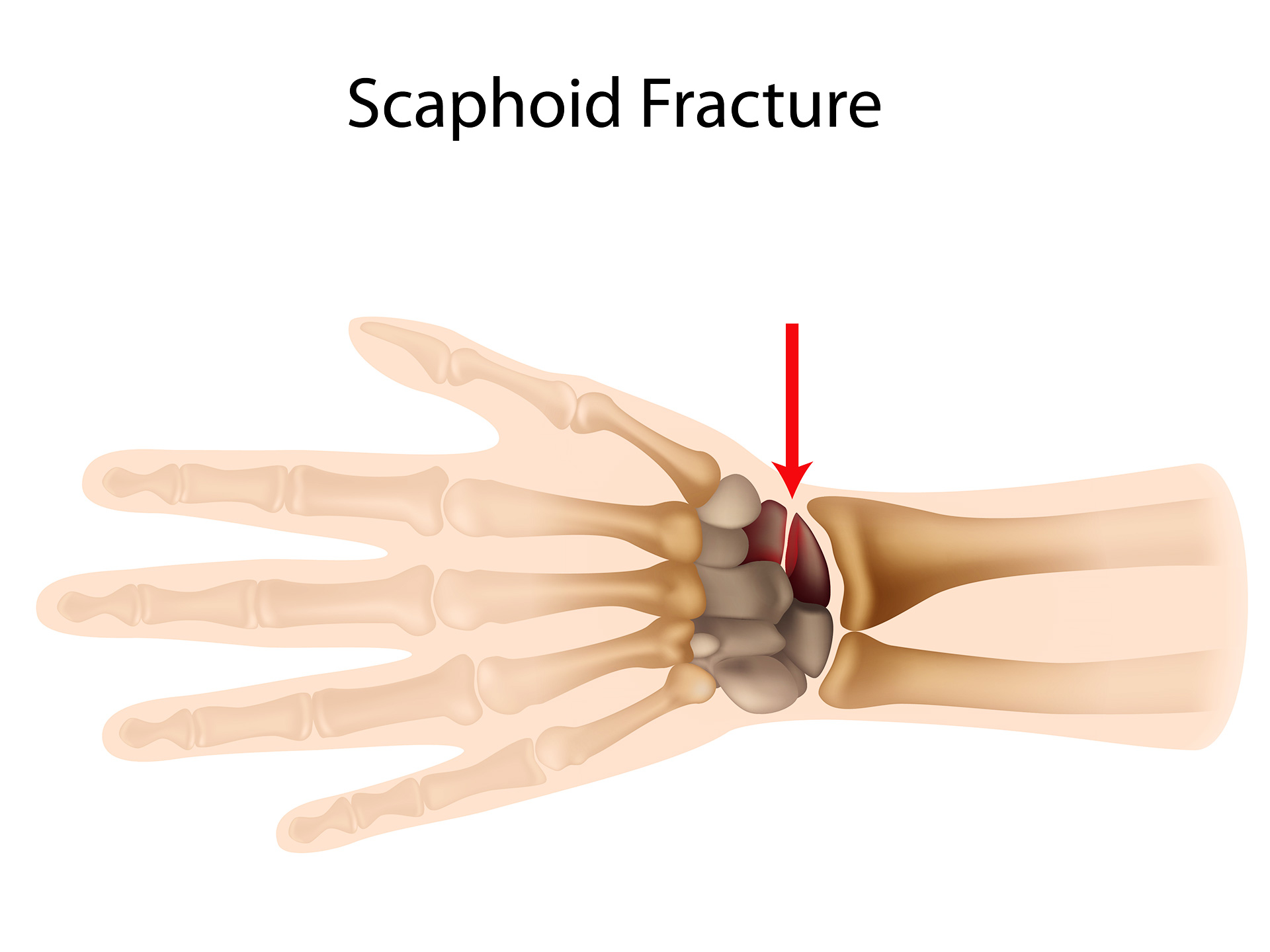
Unlike any other fracture, the major cause of scaphoid fractures is road accidents or vehicular injury. Fall on the wrist or outstretched hand causing severe pressure or force on the bone can lead to its breakage. Indirect trauma can also lead to scaphoid fracture. It can also be associated with muscular or ligamentous injuries of the wrist. Microtrauma resulting due to repeated force or trauma is another contributing factor seen. This is particularly seen in various sports.
Clinical presentation:
Fracture of the scaphoid bone is often misdiagnosed as sprain of the wrist.
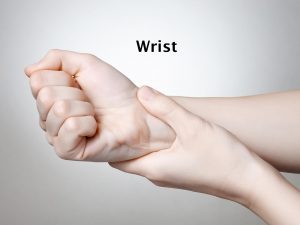
Pain is a prominent feature seen. Along with this, swelling and bruising are other complaints. Pain is especially seen at the base of the thumb. Weak grip is complained by the patient. Movement of the thumb can aggravate the pain, hence restricted movement is seen. On examination, tenderness is present.
Investigations:
Considering the symptoms, a local examination is carried out by the orthopedic doctor. There is often a history of injury. X-ray of the carpal bones is diagnostic. Other investigations like MRI scan can also be done.
Treatment:
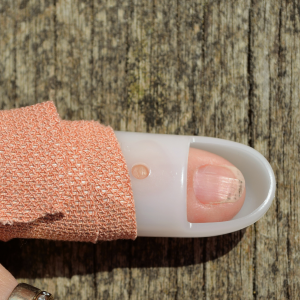
Rest, elevation of the arm, and application of ice pack are the essential steps to be implemented. Analgesic or nonsteroidal anti-inflammatory drugs are advised by the orthopedic doctor for relief of the pain. A cast is applied for immobilization for 2-3 weeks. However, it has resulted in poor healing and hence surgical intervention is mostly effective in cases of hamate fractures. Excision is done to remove the fragments or open reduction is done for internal fixation. In case if ulnar nerve injury is suspected, electrodiagnostic nerve evaluation needs to be done. As recovery starts, certain physiotherapy exercises are advised under the guidelines of a trained physiotherapist.
Other Modes of treatment:
Certain other modes of treatment can also be helpful in coping up with the symptoms. Taking into consideration the symptoms in a holistic way, homoeopathy can offer a good aid for the relief of the symptoms. The Ayurvedic system of medicine which uses herbs and synthetic derivates can also be beneficial in combating the complaints. Certain yoga exercises can also be helpful in strengthening the muscles.
Facts and Figures:
Hamate fractures accounts for 2% of all fractures.