Causes and risk factors
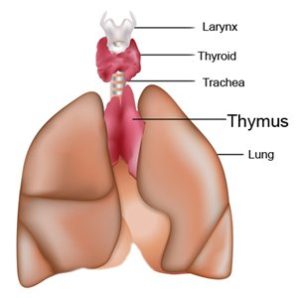
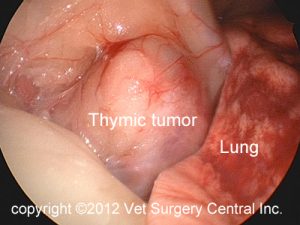
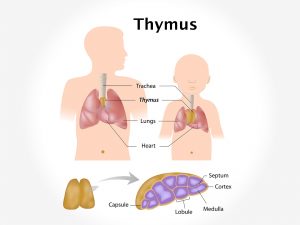
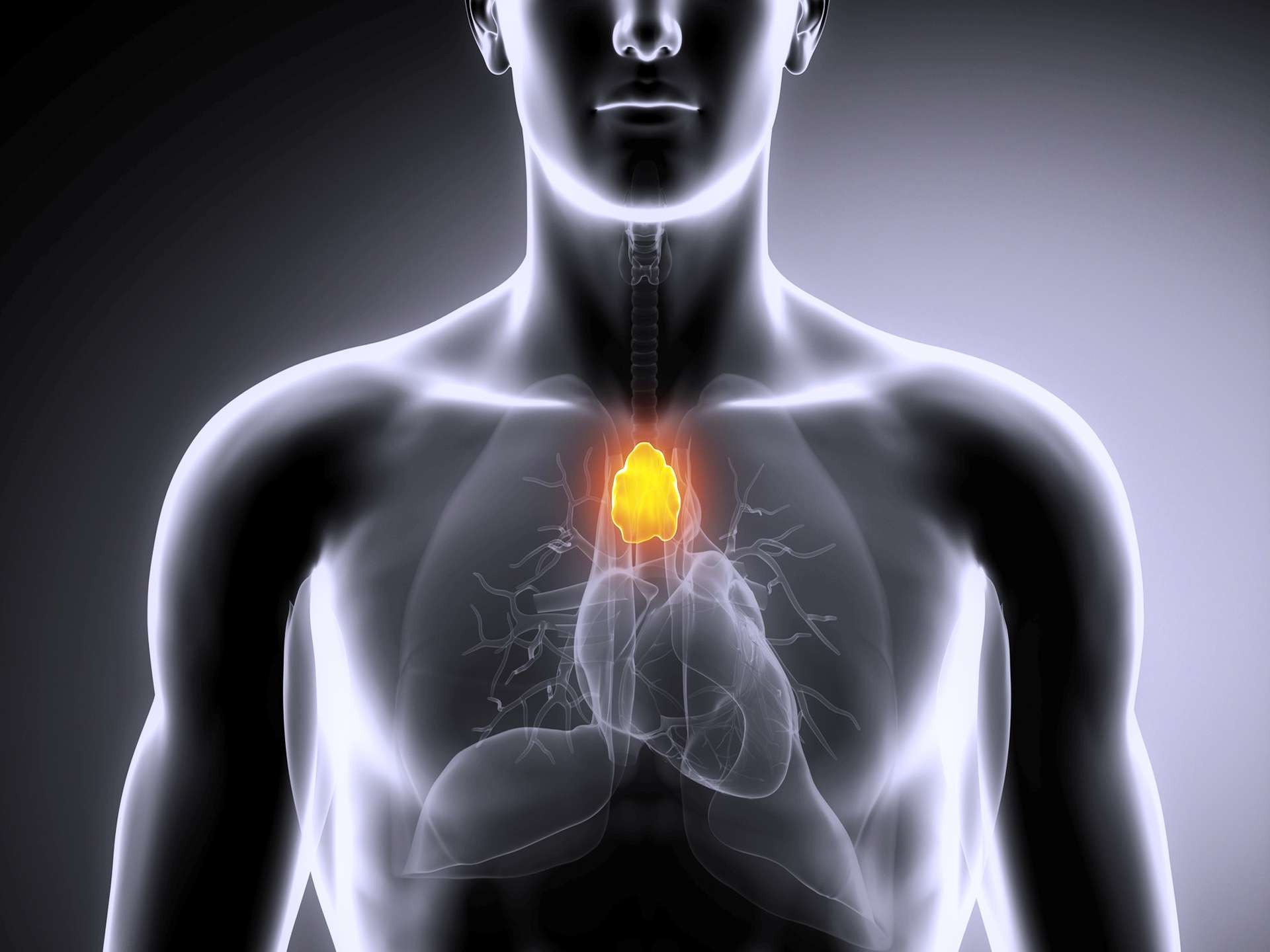
The cells undergo an abnormal and uncontrolled proliferation. Eventually these cluster of cells lead to formation of a tumor or mass. What causes this abnormal growth is still a mystery. However, tedious researches and studies have shown that certain changes in DNA of the thymus cells results in malignancy. The World Health Organization has divided it into various types: Type A: These cells are almost normal looking. The cells are spindle or oval epithelial type. Type AB: It is also known as mixed thymoma; in this along with the spindle or oval epithelial cells there are lymphocytes mixed. Type B1: The thymus cells are normal, but a lot of lymphocytes are present. Type B2: The thymus epithelial cells are large with abnormal nuclei along with presence of a lot of lymphocytes. Type B3: The thymus epithelial cells looks almost close to normal cells and the lymphocytes are few in number. Type C: It is known as thymic carcinoma where the cells have an abnormal appearance.
Clinical presentation:
Indolent growths of the abnormal cell in its initial stage do not pose any noticeable sign or symptom in the body, hence the patient remains asymptomatic for long. Over a period of time, the patient comes up with other health issues. On most of the occasions, the patient usually comes up with vague symptoms like bodyache, fatigue, and tenderness all over the body. A noticeable change in weight is complained by the patient or is brought into notice by the known ones. In the early stages of formation of tumor, no signs and symptoms are evident. As the tumor increases in size, a notable swelling can be seen in the neck region or in the chest. The overlying skin is stretched, making the veins prominent. The patient can come up with complaints of cough, difficulty in breathing along with pain in the chest region. There occurs difficulty in swallowing. Thymus being an organ of the immune system, cancer of thymus makes the person more vulnerable for development of various autoimmune diseases. Red cell aplasia, myasthenia gravis, sarcoidosis, scleroderma, systemic lupus erythematosus, etc., can develop. Metastasis can lead to various other symptoms pertaining to that system or organ.
Investigations:
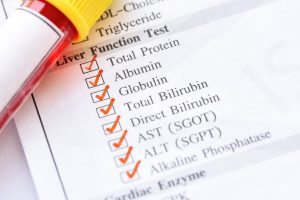
Taking into consideration the complaints mentioned by the patient, a physical examination of the patient is carried out. Accordingly, certain set of investigations are advised. Chest x-ray along with CT scan or MRI is done. If any abnormal growth or mass is detected, a biopsy is done which will help to differentiate between the benign and neoplastic cells. If the cancerous growth is confirmed, certain other set of investigations like routine blood test; blood markers for cancer diagnostics are advised. A complete scan (PET scan) is the most essential investigation tool mandatorily advised in all cancerous condition.
Treatment:
Staging of cancer, (i.e., advancement and spread of pathology) is the essential tool for formulating the treatment plan. If any abnormal mass is detected, surgical excision of the tumor (thymectomy) along with removal of the cancerous part is done. Radiation treatment along with administration of chemotherapeutic agent is done in advanced cases along with certain palliative procedure being carried out.
Complications:
Like any other cancer, late stage cancer endangers life as it is an incurable disease.
Prevention: As the exact cause is not known, it is not possible to elicit preventive measures too.
Systems involved: Immune system, respiratory system, musculoskeletal system.
Organ involved: thymus, lungs, pleura, bones, muscles, nerves,
Recent updates:
As per the American Cancer Society, studies and researches are going on for the use of targeted therapy for thymus cancer. It comprises of use of antigrowth factor drugs and anti-angiogenesis drugs. The use of a few drugs have been started in treatment, while the study and application of a few others is in the process.