
Causes and risk factors:
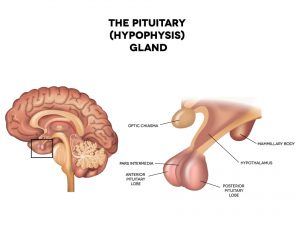
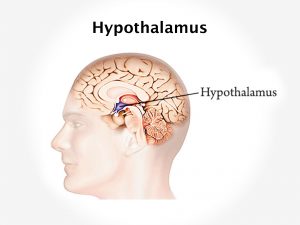
Growth hormone is a hormone that stimulates growth and regeneration of the cells. Acromegaly occurs due to excess production of growth hormone (GH). Tumors in the pituitary gland are the most common cause. Acromegaly also occurs due to tumors in the pancreas, lungs and adrenal gland. The tumors in these glands causes increase secretion of growth hormone releasing hormone (GHRH) which in turn stimulates the pituitary gland to cause increase secretion of growth hormone along with insulin like growth factor (I GF1) secreted by liver into blood leading to development of signs and symptoms of overgrowth of bones and sometime organs. Any disturbance, imbalance in production of these hormones causes the symptoms.
Clinical presentations:
Enlargement of hands and legs are the hallmark of acromegaly. The patient complains of tight fitting of rings or shoes. Swelling of the face and thickening of the lips and skin also occur. Though enlargement is seen the patient complains of pain in joints and body, weakness and fatigue is experienced. Excessive sweating occurs. There not only occurs enlargement of the external features but organs like liver, kidney, spleen and heart are also enlarged. Women complaints of disturbed menstrual complaints and difficulty in conception. Erectile dysfunction occurs in males. Enlarged chest and tongue, snoring, husky voice, headache and visual disturbances are the other associated symptoms.
Diagnosis and investigations:
Symptoms narrated by the patient and the physical examination carried out by the doctor will help to confirm the diagnosis. Many a times diagnosis may be missed for a good period of time as acromegaly is a gradual process taking sometime up to years to manifest its symptoms visible by close relatives and friends. Certain investigations which can be advised are routine blood test, growth hormone (GH) test and growth factor one test. (IGF1 levels) CT scan and MRI of the brain to detect tumors and abnormal growth of the pituitary gland is also advised.USG of other organs for clinical co relation is also advised.
Treatment:
Medications which lower down or regulate the hormone levels are administered. The commonly prescribed growth hormone antagonist, somatostatin analogues .Surgical intervention is advised in cases where there are tumors in the pituitary gland. Transphenoidal surgery is done.
Other Modes of treatment
The other modes of treatment can also be effective in treating acromegaly. Homoeopathy is a science which deals with individualization and considers a person in a holistic way. This science can be helpful in combating the symptoms.