Causes and risk factors
Horner’s syndrome is a common cause of anisocoria, caused by damage to the sympathetic trunk. Anisocoria can also result from trauma to the eye or eye surgery. Oculomotor nerve palsy and tonic pupil are other known causes of anisocoria. The use of medicated eye drops can also alter the pupil size. Other causes include increased intraocular pressure, head injury, SOL in brain, localized brain infections, epileptic disorder, etc.
Clinical presentation
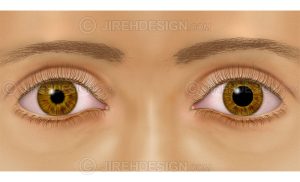
Both the pupils appear unequal in size, one being larger than the other. This inequality may be more apparent in dim light or bright light.
The patient may develop other associated symptoms depending upon the underlying cause of anisocoria. These include ptosis, diplopia, photophobia, etc. This is especially true in case of Horner’s syndrome or oculomotor nerve palsy.
Investigations
The doctor must establish whether the anisocoria is more severe on dim or bright light.
Anisocoria that is more severe in dim light is suggestive of underlying Horner’s syndrome or previous eye trauma/surgery.
Anisocoria that is more severe in bright light is suggestive of tonic pupil, palsy of the oculomotor nerve or the use of medicated eye drops.
Imaging studies such as MRI or Doppler ultrasound of the head may be carried out to find the cause of anisocoria.
Treatment
The necessity for treatment will be determined largely by the cause of anisocoria. Long-standing anisocoria not associated with other symptoms is usually benign and may not need any treatment.
However, sudden onset anisocoria especially when presenting with other symptoms needs immediate evaluation and treatment.
When to contact a doctor
Contact a doctor as soon as you notice an inequality in the size of your pupils, especially when associated with other symptoms such as diplopia or ptosis.
Facts and figures
One out of every 5 individuals have a small inequality in the pupil size known as physiological anisocoria.
Systems involved
Ophthalmic, CNS.
Organs involved
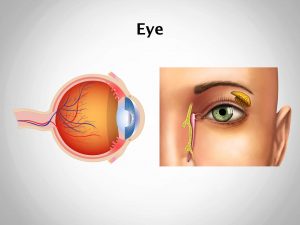
Eyes.