Causes and risk factors
Dilaceration of teeth is an abnormality occurring during development. Abrupt change in the axial inclination between the crown and root of the tooth causes dilaceration. Trauma is another common cause of dilaceration. It is commonly seen during endotracheal intubation or it can occur as a result of trauma secondary to neonatal laryngoscopy Trauma causes displacement of the calcified tooth germ causing the remaining tooth to form at an abnormal angle. Dilaceration is commonly seen in Turner hypoplasia, presence of adjacent cyst, or due to odontogenic hamartoma. Placement of orthodontic braces on a tooth with incomplete root formation leads to dilaceration.
Clinical presentation:
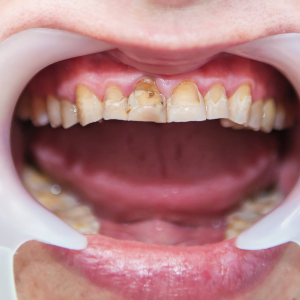
Dilaceration can either affect a primary teeth or permanent teeth. The maxillary incisors or the mandibular anterior teeth are affected. When the maxillary tooth is affected, there occurs failure of eruption of teeth while in mandibular teeth affection, inclination of the tongue and lip is seen. Angulations can be seen anywhere around the teeth.
Investigations:
The history given by the patient and the clinical examination carried out by the dentist are taken into consideration. An oral x-ray helps in confirmation of diagnosis.
Treatment:
Treatment depends upon the severity of the condition. In mild cases, usually no treatment is needed. In primary teeth affection, extraction of the tooth is done. Surgical repair is needed in severely affected cases. In cases where the crown is dilacerated for cosmetic purpose, dental implantation is required. Porcelain veneers are fitted.