Causes and risk factors
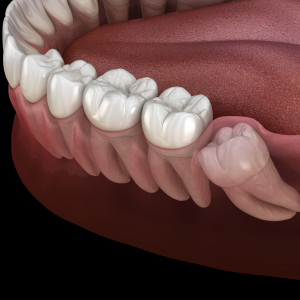
Causes of embedded impacted teeth include lack of eruptive force necessary for teeth eruption, malposition, lack of space in the jaw for the new teeth. The teeth that are impacted most commonly are the wisdom teeth. Types of impaction of teeth are – vertical impaction, horizontal impaction, mesial impaction, and distal impaction. Vertical impaction can be of two types – soft tissue vertical impaction or bony vertical impaction.
Clinical presentation
All people with impacted teeth may not have same symptoms. Symptoms include pain at the site of impacted tooth, halitosis [bad breath], and bad taste in the mouth, swelling and redness of the gums near impacted tooth, difficulty in opening the mouth, and prolonged headache.
Investigation
Medical history by the patient and clinical examination by the dentist helps in diagnosis. Dental x-ray is done to confirm the diagnosis of embedded impacted tooth.
Treatment
Surgical removal of the impacted teeth is the only treatment option for embedded impacted tooth. Depending upon the severity of the condition, surgical intervention is required.
Other Modes of treatment
The other modes of treatment can also be effective in treating embedded impacted teeth. Homoeopathy is a science which deals with individualization and considers a person in a holistic way. This science can be helpful in combating the symptoms. Similarly, the Ayurvedic system of medicine which uses herbal medicines and synthetic derivates is also found to be effective in treating embedded impacted teeth.