
Causes and risk factors
Disease can be of 2 types – hereditary – matrix formation due to defects in mineralization or maturation. Environmental – Enamel hypoplasia can be caused by various factors like nutritional disorder, hypocalcemia, deficiency of vitamin A, C, Rickettsia, illness, fever during tooth formation, local infection, or trauma. Hereditary, congenital syphilis, birth injury, Rh hemolytic disease, side effects of certain medication; exposure to toxic chemicals like tetracycline, lead, and fluoride; exposure of the mother to toxic chemicals during pregnancy can lead to this condition. It is commonly seen in children below 3 years of age.
Clinical presentation
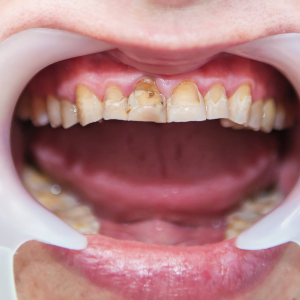
Patient comes with the following signs and symptoms – both deciduous and permanent teeth can be involved. Enamel deficient in full thickness, soft and thin enamel, and discoloration of the crown from white, yellowish white, to brown can be seen. A few small grooves, pits, or fissures are seen on tooth. Rows of deep pits arranged horizontally can be observed. There is presence of Turner’s teeth – severe pitting and irregularity of the tooth crown. Teeth have easy tendency to wear or fracture. Tooth may be seen abnormally small in some cases.
Investigation
Medical history by the patient and clinical examination by the dentist helps in diagnosis during pediatric age.
Treatment
Treatment depends upon the severity of condition. In mild cases maintaining oral hygiene, taking fluoride treatment, avoiding foods rich in sugar will help in managing enamel hypoplasia. In moderate cases, filling with tooth colored cement, use of permanent cast or crowns on the affected tooth is required. In severe cases, extraction of affected tooth and replacement with dental implant or bridge is done.
Other Modes of treatment
The other modes of treatment can also be effective in treating enamel hypoplasia. Homoeopathy is a science which deals with individualization and considers a person in a holistic way. This science can be helpful in combating the symptoms. Similarly, the Ayurvedic system of medicine which uses herbal medicines and synthetic derivates is also found to be effective in treating enamel hypoplasia.