Causes and risk factors
The exact cause for development of lipomas has not been understood yet. It has a hereditary tendency. Contrary to popular perception, lipomas are unrelated to obesity. People with certain underlying conditions such as Gardner’s syndrome and adiposis dolorosa have a higher chance of developing a lipoma.
Clinical presentation
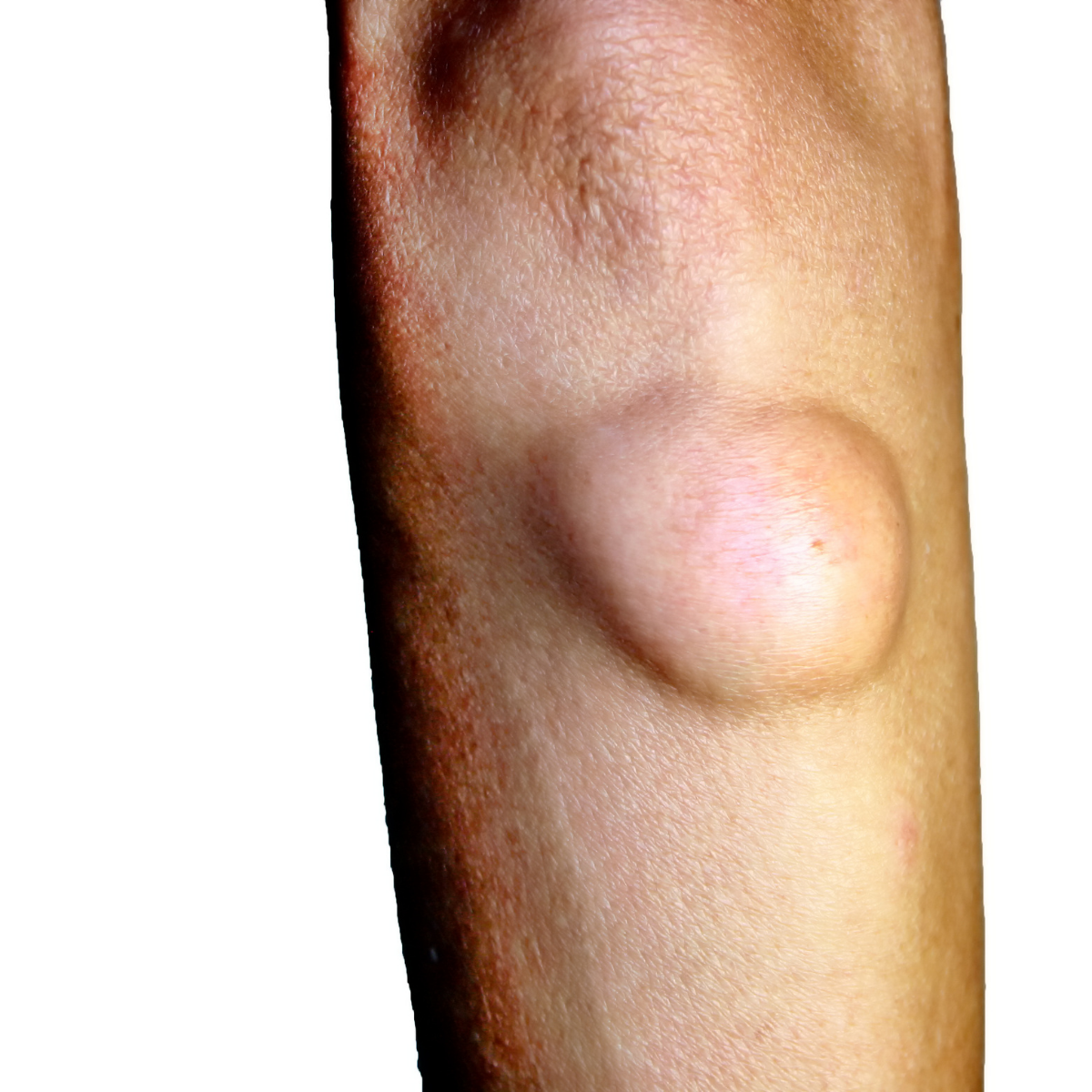
Even though lipomas can occur in any age group, they are commonly diagnosed in middle aged individuals. Lipomas can be single or multiple in number. They can be felt as smooth, soft, round, movable balls just underneath the skin. The size is variable, ranging from 1 to 3 cms. Once lipomas develop, they grow extremely slowly or may not change their size at all. They do not produce pain or any other symptoms. A lipoma can occasionally produce pain if it presses on an underlying nerve or if it becomes infected.
Investigations
Lipomas can be diagnosed on the basis of their physical appearance. If your doctor suspects another diagnosis, a biopsy can be carried out. Rarely, imaging tests such as Ultrasound, CT scan or MRI scan may be advised; especially to rule out a malignant growth known as liposarcoma.
Treatment
Since lipomas are often painless, they do not require any treatment. Surgery to remove lipoma may be considered if it becomes painful, infected, large or cosmetically undesirable. A procedure known as liposuction may be done to remove the fatty tissue.
Recent updates
According to “Journal of Cutaneous and Aesthetic Surgery”, injection lipolysis or the practice of injecting phosphatidyl choline/ sodium deoxycholate compounds in the subcutaneous fat is being studied for its use in treating lipomas.