
Causes and risk factors
Patulous Eustachian tube is usually idiopathic. Loss of body weight is a commonly identified cause. The patient frequently has a past history of otitis media or upper respiratory tract infection. Other causes include excessive use of caffeine, exercise, stress, stroke, certain neurological disorders, stroke, pregnancy, and certain drugs.
Clinical presentation
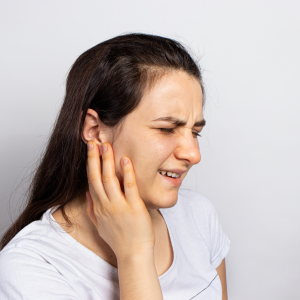
A patulous Eustachian tube alters the hearing of the patient. Outside sounds may sound muffled. At the same time, the patient starts perceiving his own voice and breath sounds – known as autophony. He may also experience a sense of fullness in his ear with a frequent desire to clear it. The patient’s speech also becomes affected. He may experience vertigo.
A patulous Eustachian tube in turn increases the patient’s rate of respiration and his heartbeat. It also leads to increased blood flow to the peripheral muscles.
Investigations
The doctor will initially carry out a physical examination of the ear. A tympanogram may be performed. Imaging scan such as a CT may be recommended. Rarely a nasopharyngoscopy or a trans-nasal endoscopy may be advised.
Treatment
For temporary relief from the symptoms, the patient is advised to adopt a series of posture positions such as sitting with head between the knees or elevating the limbs.
The patient is advised to tackle the underlying causes by gaining weight, reducing exercise, or giving up caffeine. Estrogen nasal drops are recommended to the patient.
Procedures such as cautery, diathermy, or occlusion of the Eustachian tube may be performed.
Surgical intervention sometimes becomes necessary where the Patulous Eustachian tube is closed with the help of gel or fat.
Complications
A patulous Eustachian tube and its treatment may give rise to complications such as effusions in the middle ear and damage to the trigeminal nerve.
When to contact a doctor
Contact a doctor as soon as you experience any defects in hearing, especially autophony.
Facts and figures
This condition is more commonly observed in females, especially those above the age of 30 years.
Systems involved
Otology
Organs involved
Ear