Causative and risk factors
Sometimes pneumothorax may occur spontaneously in the absence of any underlying cause. It is initiated by a ruptured cyst or bleb on the lung. In such cases, it is known as spontaneous or primary pneumothorax.
Pneumothorax caused as a result of a specific cause is termed as secondary or complicated pneumothorax. This can be caused by injuries to the chest, fractured ribs or insertion of chest tubes. Underlying lung diseases such as COPD, cystic fibrosis, pneumonia etc. can also lead to pneumothorax. Patients on mechanical ventilation are also at risk of developing this condition.
A third type is known as tension pneumothorax, wherein the leak of air from the lungs into the chest cavity is so severe that the blood vessels and other chest organs start becoming compressed. This is an emergency condition which may be fatal if timely treatment is not rendered.
Mechanism of development of pneumothorax: When we inspire the lungs expand into the pleural space, creating a vacuum within the pleural space. When any condition causes air to enter the pleural space, this vacuum is lost, causing the lung to collapse.
The risk factors for the development of pneumothorax are smoking and belonging to the male gender.
Clinical presentation
The patient experiences a sharp chest pain on the affected side along with a sensation of tightness. He/she may develop breathlessness and tachycardia. Coughing may be present. Some patients may develop cyanosis.
Pneumothorax is prone to recurrence.
Investigations
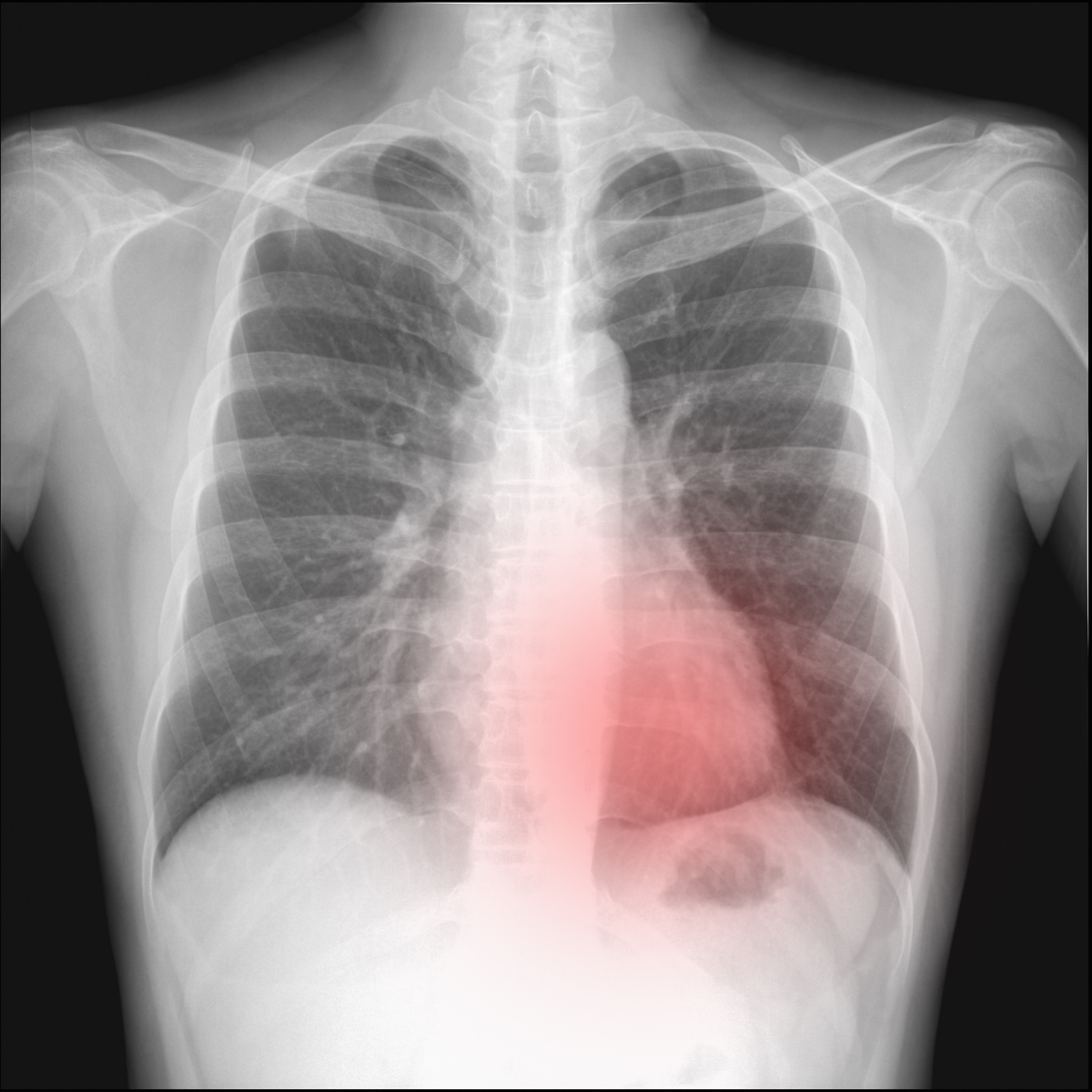
A physical examination will reveal decreased or absent breath sounds on the affected lung on auscultation. Imaging scans such as a chest X-ray or CT scan are used to confirm the diagnosis of pneumothorax.
Treatment
In mild cases of pneumothorax, the patient is only kept under observation and oxygen supplementation is given if necessary. A small pneumothorax usually heals within a few days.
In more severe cases, the air trapped into the pleural space needs to be released. A needle or chest tube is used to remove the trapped air (underwater seal drainage). When this does not help, surgical intervention may be needed. This can include thoracotomy (an incision into the pleural space) or lobectomy (removal of a part of the lung).
Tension pneumothorax is a medical emergency needing ventilator support and immediate surgical intervention.