
Causes and risk factors
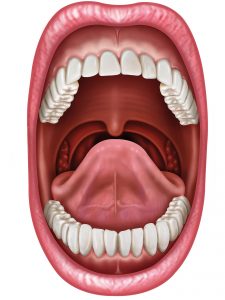
Recurrent attacks of tonsillitis causes the mouth of tonsillar crypt, usually intratonsillar cleft, to become fibrosed. With any new attack of infection due to edema and fibrotic stenosis, mouth of crypt completely closes. Instead of draining into oral cavity, pus breaks through the capsule and causes peritonsillar cellulitis, which develops into peritonsillar abscess. It occurs between the age of 20 to 50 years. It is commonly seen in males. Quinsy presents as – anterior presentation – it is the commonest type. Abscess tends to point through the anterior pillar. Posterior presentation pushes the tonsil forwards. Lingual – here the lower pole of tonsil is affected. Tonsillar – here the quinsy occurs within the tonsil.
Clinical presentation
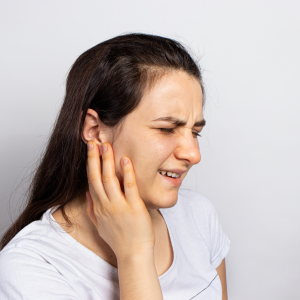
Patient presents with severe unilateral pain radiating to the ear. Pain gets aggravated on swallowing. Trismus, i.e., difficulty in opening the mouth is experienced by the patient. There is increased salivation. Speech is thick and accompanied by a rattling sound of saliva. Constitutional symptoms like fever, malaise, body ache may be present. Signs like swelling and redness in the anterior pillar is seen. Tonsil becomes congested and pushed medially downwards by the abscess. Uvula becomes edematous and elongated. Halitosis may be present. Enlargement of cervical lymph nodes may occur.
Investigation
Medical history by the patient and clinical examination by the ENT doctor helps in diagnosis. Imaging studies such as x-ray of oropharynx and nasopharynx, USG, CT scan of oral cavity may be useful for further evaluation.
Treatment
Medical treatment involves analgesics, NSAIDs, antibiotics. Oral hygiene and adequate hydration should be maintained. Surgical treatment involves incision and drainage of the abscess.
Other Modes of treatment
The other modes of treatment can also be effective in treating quinsy. Homoeopathy is a science which deals with individualization and considers a person in a holistic way. This science can be helpful in combating the symptoms. Similarly, the Ayurvedic system of medicine which uses herbal medicines and synthetic derivates is also found to be effective in treating quinsy.