
Causes and risk factors
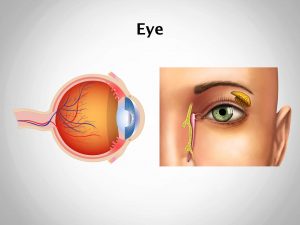
The rods and cones contained in the retinal layers degenerate gradually eventually leading to blindness. The cause leading to retinitis still remains unknown. The only fact known is that it is inherited and there exist some genetic factors which are involved resulting in retinitis.
Clinical presentation:
An individual starts complaining of minor visual disturbances right from childhood; however, up until the adulthood no serious visual complaints are seen. Bilateral involvement of the eyes are seen. As the light sensing cells, which are responsible for vision especially in dim lights or at night gradually degenerate, there occurs night blindness. It is the cardinal symptom seen initially. Over time the visual field becomes constricted. There occurs peripheral vision loss, everything appears blurred. Flashes of light are seen by the patient and ultimately central vision loss can lead to blindness.
Investigations:
Diagnosis is done on the basis of the symptoms narrated by the patient and the examination carried out by the ophthalmologist. ERG (electroretinography) and EOG (electro-oculography) is the diagnostic test. Formal visual testing, color testing, and genetic subtyping are the others investigations which can be advised.
Treatment:
In spite of tedious efforts, there still does not exist any satisfactory and curative treatment approach for retinitis. Medications containing fat soluble vitamins and calcium channel blockers can be advised. Surgical intervention consists of cataract removal. Recently, many companies are on the verge of developing retinal implants and other experimental devises.
Other Modes of treatment:
Certain other modes of treatment can also be helpful in coping up with the disease. Taking into consideration the symptoms in a holistic way, homoeopathy can offer a good aid for the relief of the symptoms. The Ayurvedic system of medicine which uses herbs and synthetic derivates can also be beneficial in combating the complaints.
Recent update:
The US Food and Drug Administration (FDA) has approved the first retinal implant, the Argus II Retinal Prosthesis System, for adults aged 25 years or older with advanced RP.