
Causes and risk factors
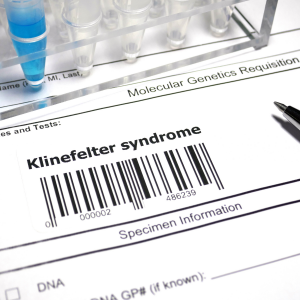
Male and female sex organs develop from same tissue. A child’s sex is determined at the time of conception. Mother’s ovum contains XX chromosome whereas father’s sperm contains XY chromosome. During conception if the foetus takes X from mother and Y from father, it’s a baby boy and if it takes up X from mother and X from father it’s a baby girl. If this process is disrupted it leads to formation of Ambiguous genitalia. Lack of male hormones in genetic male or exposure to male hormones during development in genetic female leads to development of Ambiguous genitalia. Causes in genetic male include chromosomal abnormalities, congenital adrenal hyperplasia, impaired testicle development, androgen insensitivity syndrome, and 5a reductase deficiency. Possible causes in genetic female include chromosomal abnormalities, congenital adrenal hyperplasia, tumours in the mother. Family history plays an important role in development of Ambiguous genitalia. Risk factors such as family history of unexplained deaths in early infancy, infertility, amenorrhoea, excess facial hair in females, genital abnormalities, and abnormal physical development at puberty are also responsible for the development of this condition.
Clinical presentation
The condition is diagnosed as soon as the baby is born. Different types of ambiguous genitalia are – baby with ovaries and testicles but unclear external genitals; baby with ovaries and penis like structure or a baby with undescended testes and female external genitalia. In genetically female baby, signs like enlarged clitoris that resembles penis, fused labia resembling scrotum or lumps that feel like testes in closed labia are seen. In genetically male baby, urethra doesn’t extend to the tip of penis; small penis with urethral meatus close to scrotum, small scrotum that looks like labia, absence of one or both testes is observed.
Investigation
Physical examination by the doctor helps in diagnosis of the condition. It is important to find the underlying cause. Blood test for determination of hormonal functioning, genetic testing by buccal smear, abdominal x ray, USG, endoscopy may be done for further evaluation. In some cases biopsy of gonads is done to confirm the diagnosis.
Treatment
Treatment is given to ensure sexual function and potency of the patient as an adult. Firstly parental counselling is essential. Once the parents have decided the gender of the baby, they raise and treat the child accordingly. Medication like hormone replacement therapy contribute further to the treatment. Surgical correction is done to preserve normal sexual function and to create more natural looking genitals. Supportive care is given for the psychological and social well being.