
Causes and risk factors
Chronic actinic dermatitis is commonly seen in people who have skin which is sensitive to sunlight or artificial lights. The exact mechanism as to why these people develop this condition is still not clear. This condition can be seen in people who have a history of other skin disorders like atopic dermatitis, photocontact dermatitis or allergic contact dermatitis. This condition is also associated with allergy to certain other substances.
Clinical presentation:
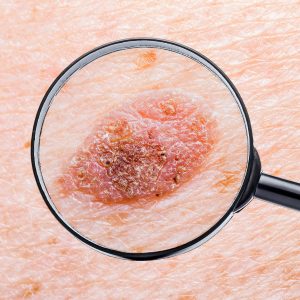
Development of rash on the areas which are exposed to sun is the common feature seen. It is particularly seen on face, neck, hand, and upper trunk. The affected part is red, inflamed, and itchiness is seen. The rash appearing in upper trunk is typically seen in a V-shaped pattern. Initially it is seen on sun exposed area, however, gradually it is seen in covered skin areas too. Mostly within 30 seconds of exposure to sunlight or artificial light there occurs an appearance of rash, however, it can delay too. The affected skin becomes thickened, dry, and scaly. Pigmentation of skin can occur. Although these rashes tend to persist in winter, the complaints are aggravated during summer.
Investigations:
Diagnosis is done on the basis of symptoms narrated by the patient and the physical examination carried out by the dermatologist. The doctor examines the lesion through a dermatoscope. Photo testing and patch testing are diagnostic.
Treatment:
There is no exact cure for this condition. Medications in the form of topical applications are advised for temporary relief. It consists of administration of topical corticosteroids and emollients. Desensitizing light therapy can also be useful. In cases where there is no relief, immunosuppressive medications can be given. Avoid exposure to sunlight, artificial light, and allergens.
When to contact a doctor:
Recommendation of an expert in the field of dermatology is advised in cases if one notices any rash and itching on the body.
Prevention:
One should avoid prolonged exposure to sunlight or artificial light. Use of a sunscreen lotion is recommended.
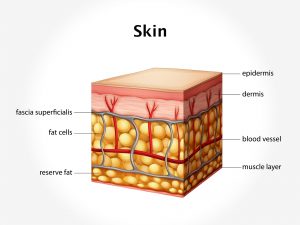
System involved: Integumentary system.
Organ involved: Skin