Causes and risk factors
Cold urticaria is caused by exposure of skin to cold objects, cold water, ice etc. swimming in cold water is the most common cause. the reaction is caused due to activation of mast cells and release of histamine and other inflammatory cells. Cold urticaria can be primary [idiopathic] or secondary – due to some underlying cause. Secondary causes include disease conditions like cryoalbuminemia, chronic lymphocytic leukaemia, lymphosarcoma, chicken pox.
Clinical presentation
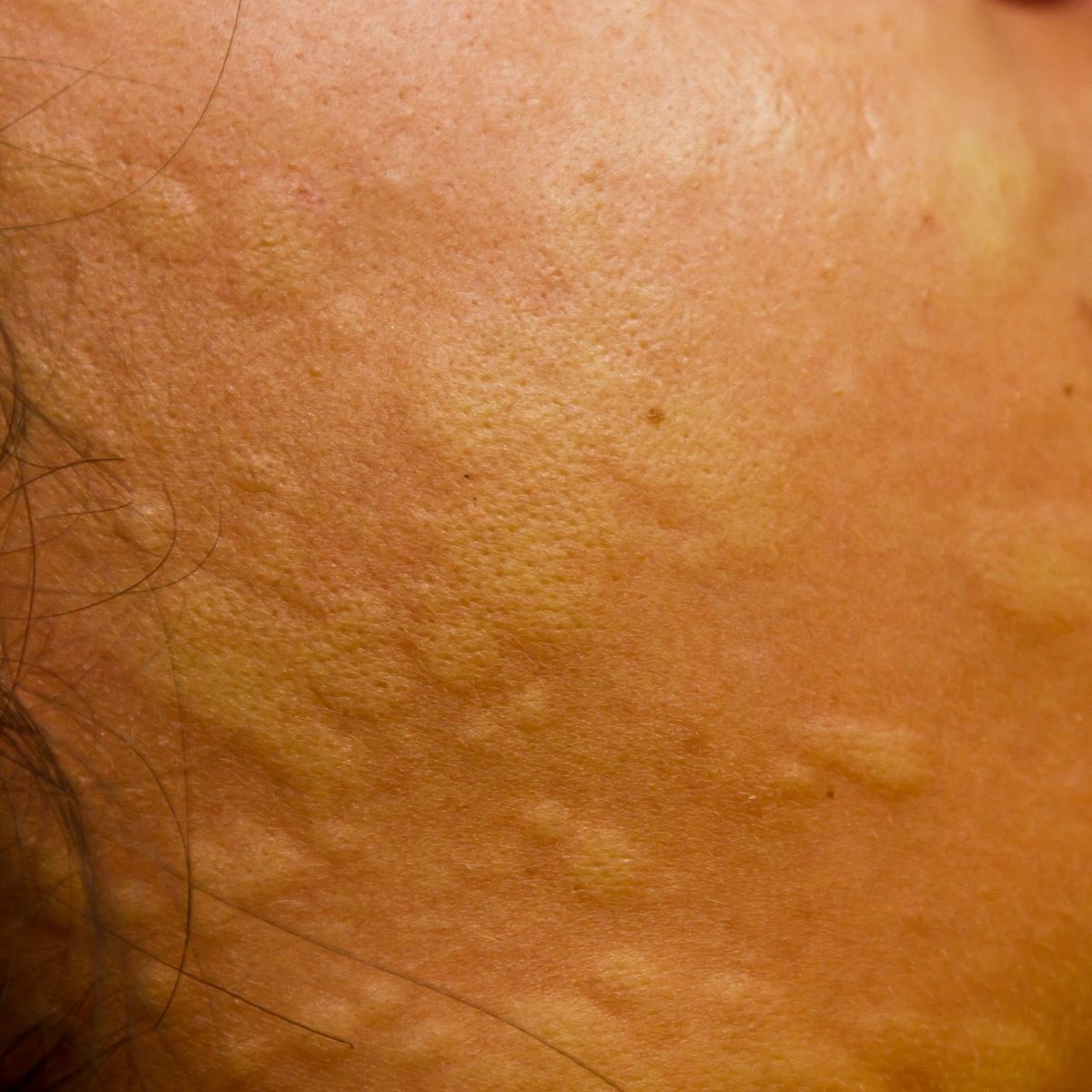
Patient will show features of cold urticaria within 2-5 minutes of exposure. Raised red or white wheals of various sizes and shapes. The rash can be localised [part of body] or generalised [whole body]. Patient complains of itching, burning or stinging in the affected area. Sometimes it can be painful. Some patients present with features like shortness of breath, wheezing, irregular rapid heartbeat, abdominal pain. In advanced cases, weak pulse, dizziness, loss of consciousness , fall in blood pressure, collapse and shock may occur.
Investigation
Medical history by the patient and Clinical examination by the dermatologist helps in diagnosis. Blood test is done. A skin test may be performed.
Treatment
Immediate treatment involves hot compression or hot fomentation of body. Long term treatment involves avoidance of exposure to cold objects; cold water etc. water sports activities should be avoided or done under supervision. Antihistaminic may help in mild reactions. In case of anaphylactic shock, injectables adrenaline, oxygen, corticosteroids will
Other Modes of treatment
The other modes of treatment can also be effective in treating cold urticaria. Homoeopathy is a science which deals with individualization considers a person in a holistic way. This science can be helpful in combating the symptoms. Similarly the ayurvedic system of medicine which uses herbal medicines and synthetic derivates are also found to be effective in treating cold urticaria.