Causes and risk factors
Under normal circumstances, the Eustachian tube remains closed and is filled with air. However, when we yawn or chew, the tube opens up in order to allow supply of fresh air. Opening of the Eustachian tube also helps in draining any mucus from the middle ear and maintaining equal air pressure on either side of the tympanic membrane.
A dysfunctioning Eustachian tube remains blocked or doesn’t open properly. This leads to an imbalance in the air pressure on either side of the tympanic membrane, eventually affecting the tympanic membrane’s capacity to vibrate in response to sound waves.
Common cold is the most common risk factor for the development of Eustachian tube dysfunction. In fact, any upper respiratory tract infection including sinusitis and allergies can lead to the dysfunction of the Eustachian tube. This condition also tends to occur when descending down in an aircraft.
Clinical presentation
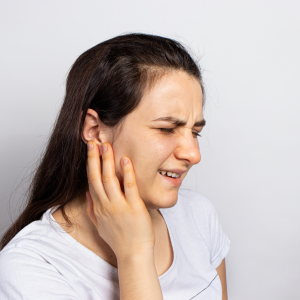
The patient experiences a sense of fullness in the ear. The hearing of the patient becomes muffled. Otalgia (pain in the ear) is a commonly occurring symptom. The patient may develop tinnitus (ringing or buzzing in the ear).
Investigations
Dysfunction of the Eustachian tube can be diagnosed clinically. A thorough ENT evaluation is performed. No extensive investigations are necessary.
Treatment
Dysfunction of the Eustachian tube is usually self-limiting and hence no specific treatment is necessary. The patient is advised to perform the Valsalva maneuver in an attempt to open the Eustachian tube. Deep breathing exercises, chewing gum, and swallowing movements help to open up blocked Eustachian tube.
Antihistamines or decongestant drugs can be prescribed to relieve the symptoms. Nasal sprays containing steroids or antihistamines may be used.
When to contact a doctor
Contact a doctor as soon as you experience any ear symptoms such as blockage, ear pain or loss of hearing.
Prevention
Avoidance of allergens and timely control of cold and flu helps to prevent dysfunction of the Eustachian tube.
Systems involved
Otology.
Organs involved
Ear, nose