Causes and risk factors
Ingrown toenails can be caused due to improper cutting of the toenail, especially when the toenail is cut too short. Wearing extremely tight shoes or getting an injury to the toenail can also cause the nail to become ingrown. Some people naturally have very curvy nails that tend to grow inwards.
Clinical presentation
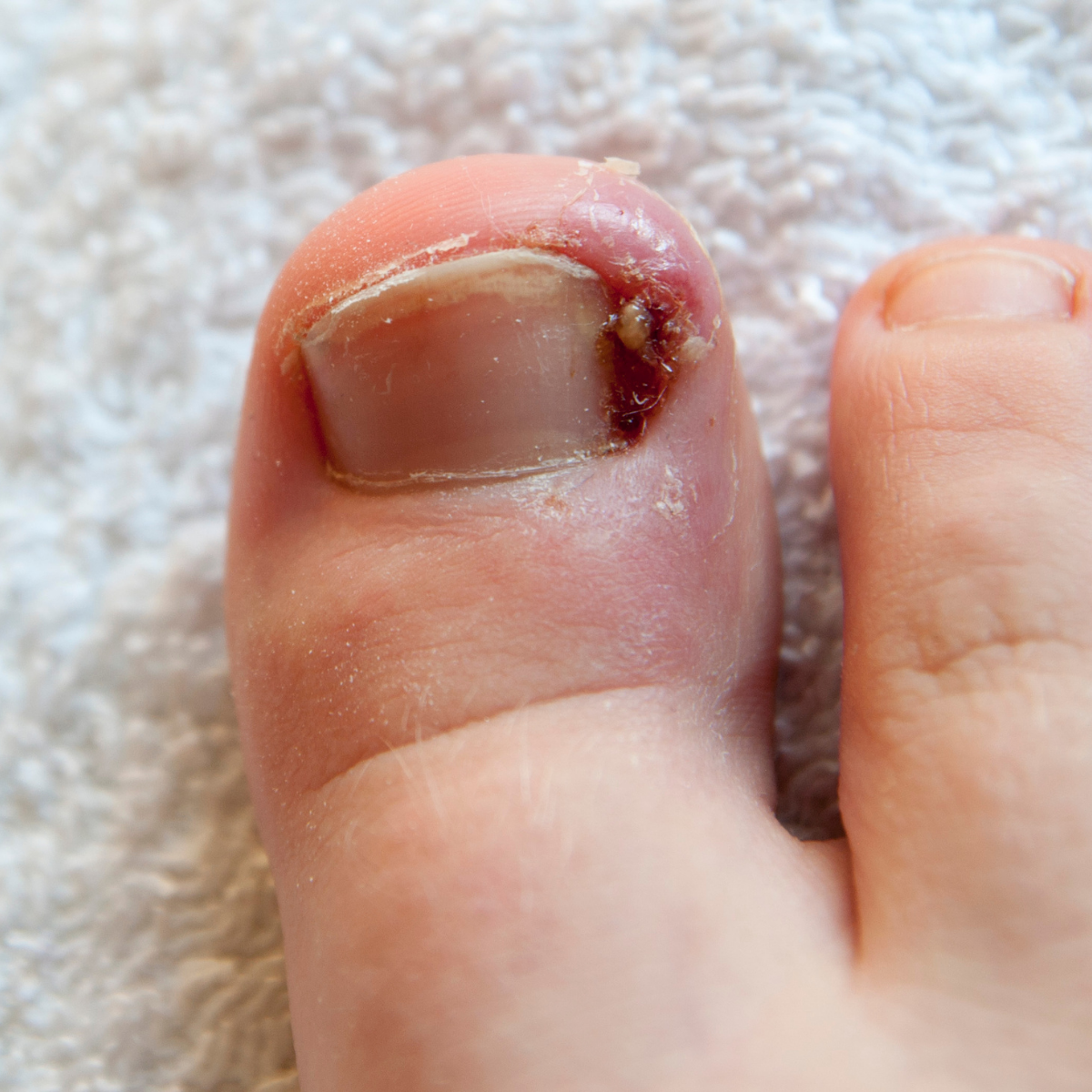
The affected toe becomes painful, red and swollen. It may even become infected. The infection can spread to the underlying bone.
In diabetics, an ingrown toenail can lead to serious complications such as a non-healing foot ulcer or even gangrene.
Investigations
An ingrown toenail can be easily diagnosed on the basis of visual inspection.
Treatment
The patient is advised to soak his feet in warm water several times a day to obtain relief. The edge of the nail is lifted up and cotton is placed between the nail and the flesh. Antibiotic cream must be applied to the affected toe followed by bandaging. Pain relieving drugs are given to lessen the pain. Part of the ingrown nail may be trimmed if necessary. In severe cases, a part of the nail may be removed along with its underlying nail bed. Sometimes, it may become necessary to excise the whole nail along with the underlying nail bed.