Causes and risk factors
After delivery, patient’s genital tract has large bare surface area which can become infected. Invasion of organism does not cause sepsis in itself; it is caused as a result of body’s response to the infection caused by bacteria or other harmful organism in the form of release of chemicals or toxins in the bloodstream. Following are the factors that can cause puerperal sepsis – traumatic operative delivery, antepartum hemorrhage, postpartum hemorrhage, retained bits of placental tissue or membranes, prolonged rupture of membranes, placenta previa, cesarean delivery, endometritis, and urinary tract infection. Organisms that can cause puerperal sepsis are – Streptococcus haemolyticus group A and B, E. coli, Pseudomonas, anaerobic Streptococcus, Clostridium tetani, Clostridium welchii, Chlamydia, gonococci. Bacteria causing puerperal sepsis can be endogenous or exogenous. Endogenous – bacteria live with the genital tract and are harmless, but they can become harmful after conditions like repeated pelvic examination, bruised, lacerated tissue, and prolonged rupture of membranes. Exogenous – bacteria are introduced into the body from outside due to conditions like use of unsterile instruments during delivery, droplet infection from healthcare provider, insertion of foreign body into vagina, or sexual activity. Factors which increase the risk of puerperal sepsis are malnutrition, anemia, preterm labour, diabetes, obesity, and multiple vaginal examinations.
Clinical presentation
The infection may involve only the cavity and wall of uterus or may spread to cause peritonitis or septicemia. If the infection is localized, patient has a distended abdomen. There is tender mass coming from the pelvis. Hyperactive bowel sounds may be heard. There may occur pelvic abscess in the pouch of Douglas. If sepsis is generalized, patient can present with fever with chills and rigor, malaise, weakness, anorexia. There is low blood pressure. Patient complains of abdominal pain. The patient is unable to walk. There is offensive and profuse vaginal discharge. Wound becomes red and swollen. Subinvoluted and tender uterus is observed. Patient may end up in shock.
Investigation
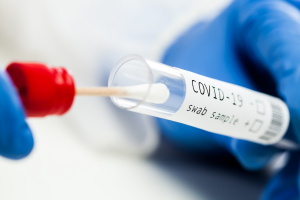
Medical history by the patient and clinical examination by the gynecologist helps in diagnosis. Complete blood count, blood culture, blood urea, and electrolytes are recommended. Vaginal swab for culture is taken. Urinalysis, urine culture is done. Pelvic ultrasound is advised. Imaging studies such as USG abdomen, CT and MRI is useful for further evaluation.
Treatment
Puerperal sepsis is a medical emergency and must be treated promptly. Antibiotics are given either orally or intravenously. IV fluids are administered. Adequate fluid and calorie intake is recommended. Isolation of the patient is required. Analgesics are administered to reduce pain. Anemia, if present, is corrected with oral iron intake or by blood transfusion. A urinary catheter is used to relieve any urine retention. Surgical procedure may be needed to remove stitches of perineal wound, drainage of pelvic abscess, procedure like curettage to remove retained uterine products such as pieces of placenta.
Other Modes of treatment
The other modes of treatment can also be effective in treating puerperal sepsis. Homoeopathy is a science which deals with individualization and considers a person in a holistic way. This science can be helpful in combating the symptoms. Similarly, the Ayurvedic system of medicine which uses herbal medicines and synthetic derivates is also found to be effective in treating puerperal sepsis.
Facts and figures
As per WHO about 5,00,000 women worldwide die of complications of pregnancy and childbirth.